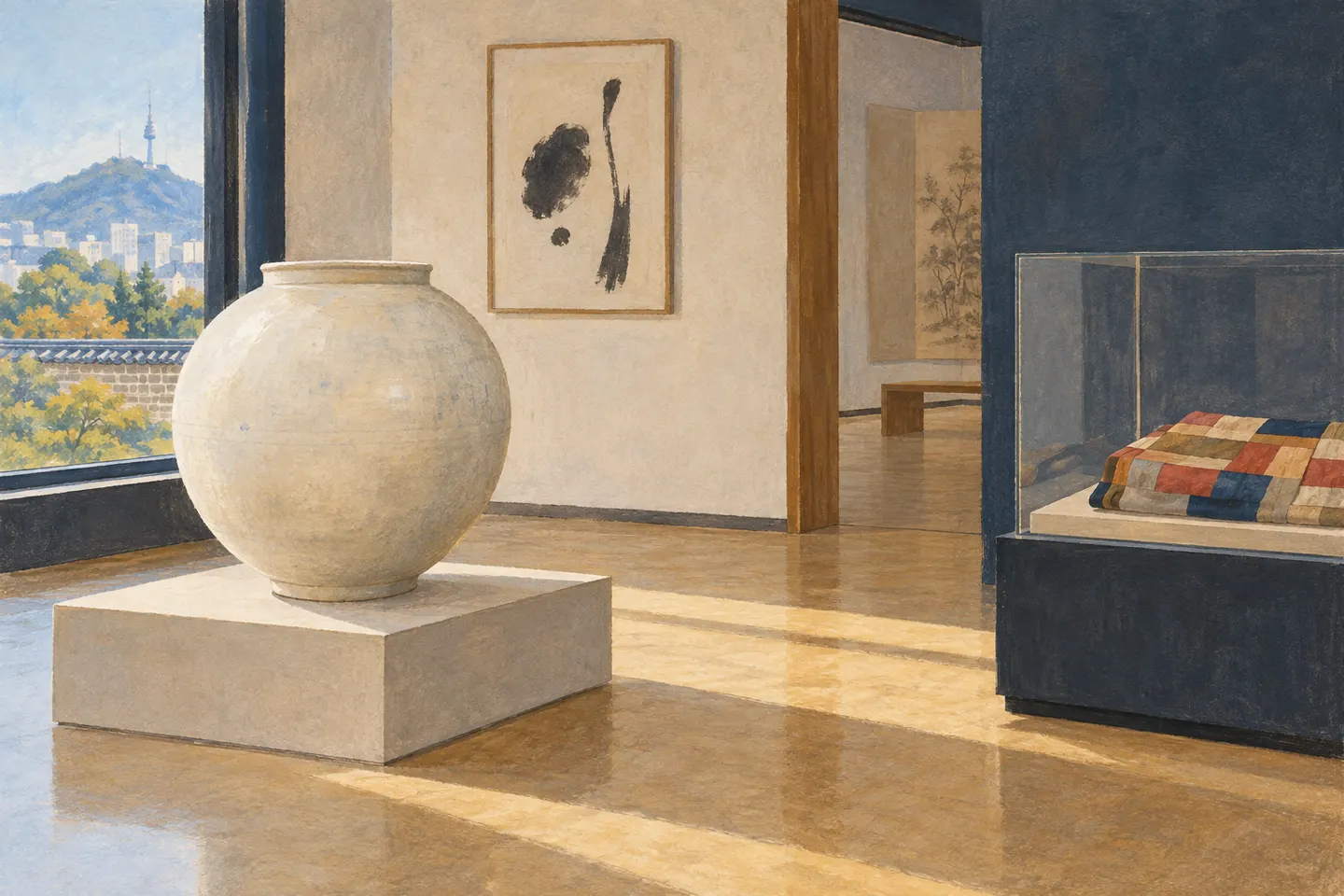
For tiled rooflines below Bukhansan
1. Eunpyeong Hanok Village
은평한옥마을The hanok neighborhood in Jingwan-dong puts Korean tiled roofs against the mountain rather than a dense downtown skyline. Visit Seoul identifies it as a modern hanok village at the foot of Bukhansan. Come for the relationship between roofs, streets and the landscape; this is a different architectural outing from the narrow commercial lanes of Ikseon-dong. Source: Visit Seoul: Eunpyeong Hanok Village
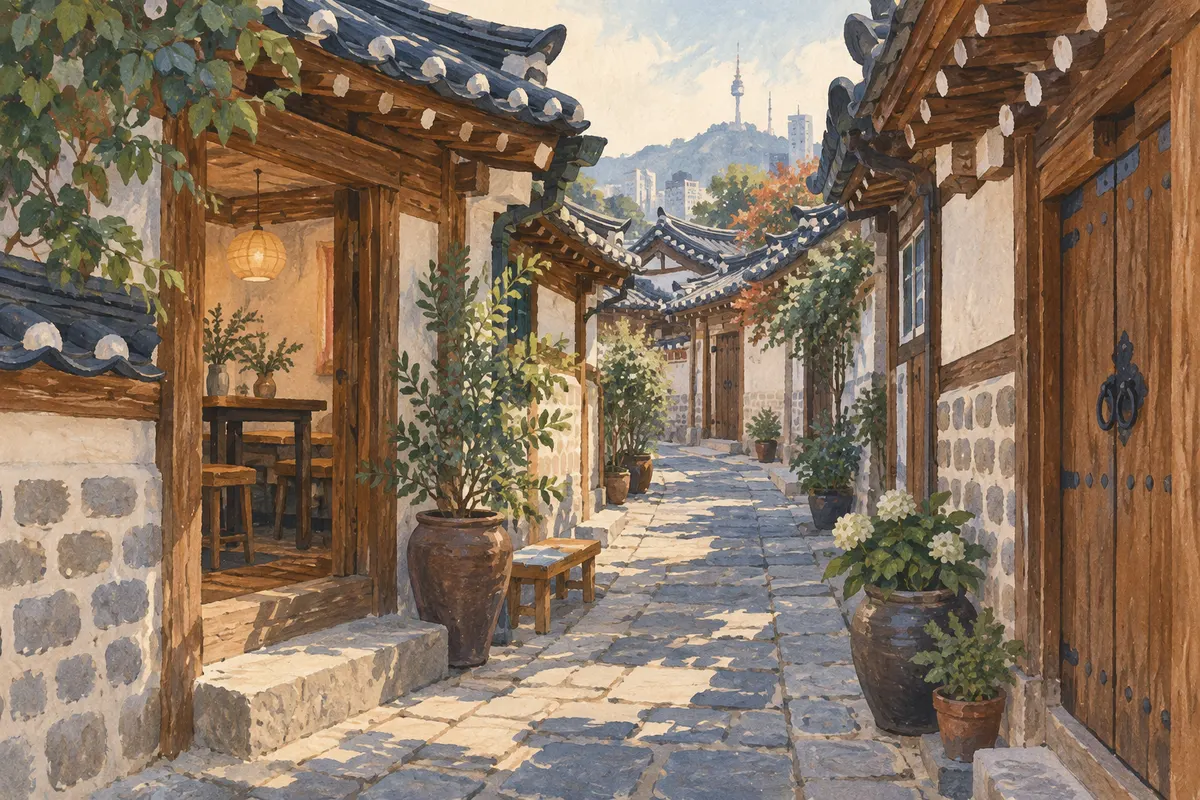
Korean roof and timber details, illustrated. AI-generated illustration, not a photograph of the venue. Begin outdoors, then choose one nearby indoor stop. The museum explains the buildings, while Darakbang gives the afternoon a tea-focused activity.
A residential neighborhood includes private houses. Use public streets, keep doorways clear and ask before photographing inside a business.
Save 은평한옥마을. The Hanok Museum at 8 Yeonseo-ro 50-gil is a specific meeting point beside the village, rather than an assumed entrance to the entire neighborhood.
Continue with our Compare with Ikseon-dong in the old city.
For a temple visit beyond the village
2. Jingwansa Temple
진관사Jingwansa sits in Bukhansan National Park, farther along Jingwan-gil from the village. Its halls and temple grounds give the outing a religious and historical focus. The official tourism page uses the spelling Jinkwansa; the Korean name 진관사 is useful when matching either English spelling to a map. Source: Visit Seoul: Jinkwansa Temple
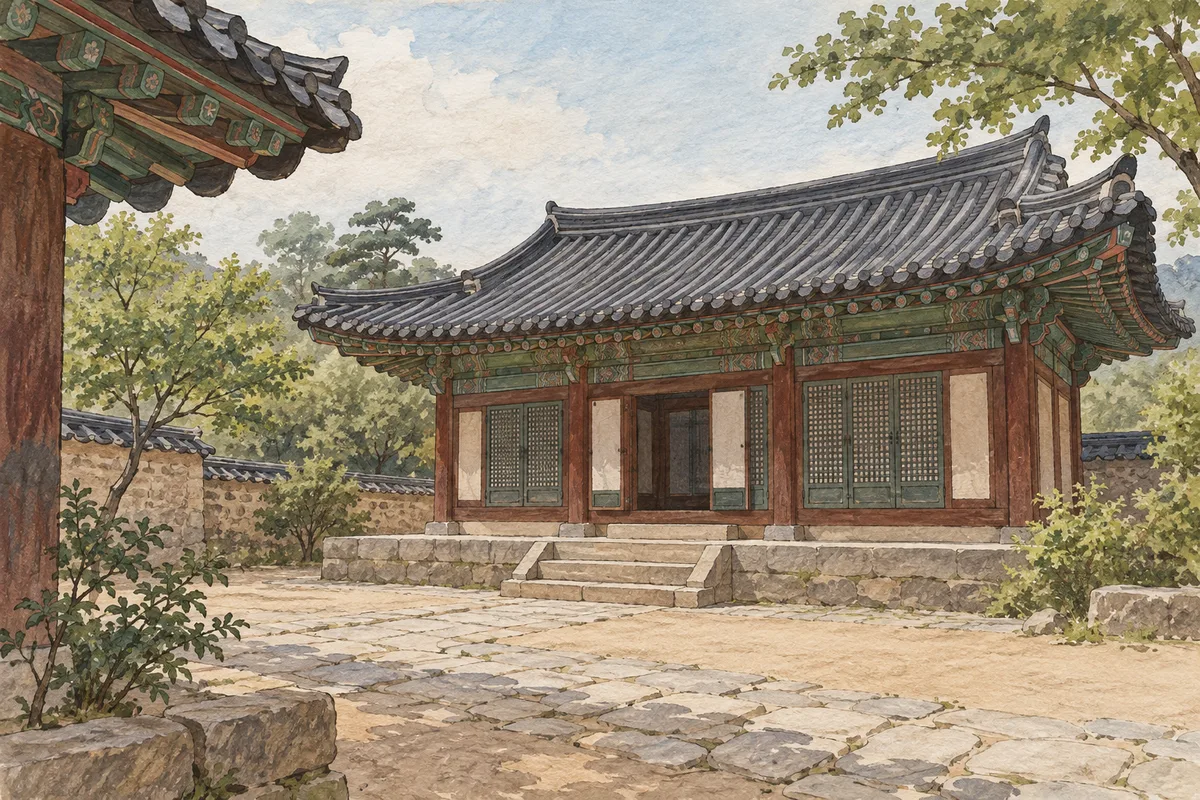
A temple courtyard, illustrated. AI-generated illustration, not a photograph of the venue. Choose this stop if a temple visit matters more than another café. A walk through the grounds and a temple-stay booking are different plans.
Temple-stay programs have their own arrangements. Do not assume that an ordinary visit includes a meal, guided session or access to every building.
Use 73 Jingwan-gil, Eunpyeong-gu. Follow the temple’s posted access rules and check its own program information if you want more than a grounds visit.
For the construction behind the rooflines
3. Eunpyeong History Hanok Museum
은평역사한옥박물관The museum gives the nearby houses more context. Its second-floor history hall presents finds excavated in the Eunpyeong New Town area; the third-floor hanok hall turns to construction and the workings of traditional houses. It is the strongest fit here for someone who wants to understand how a hanok is put together. Source: Visit Seoul: Eunpyeong History Hanok Museum
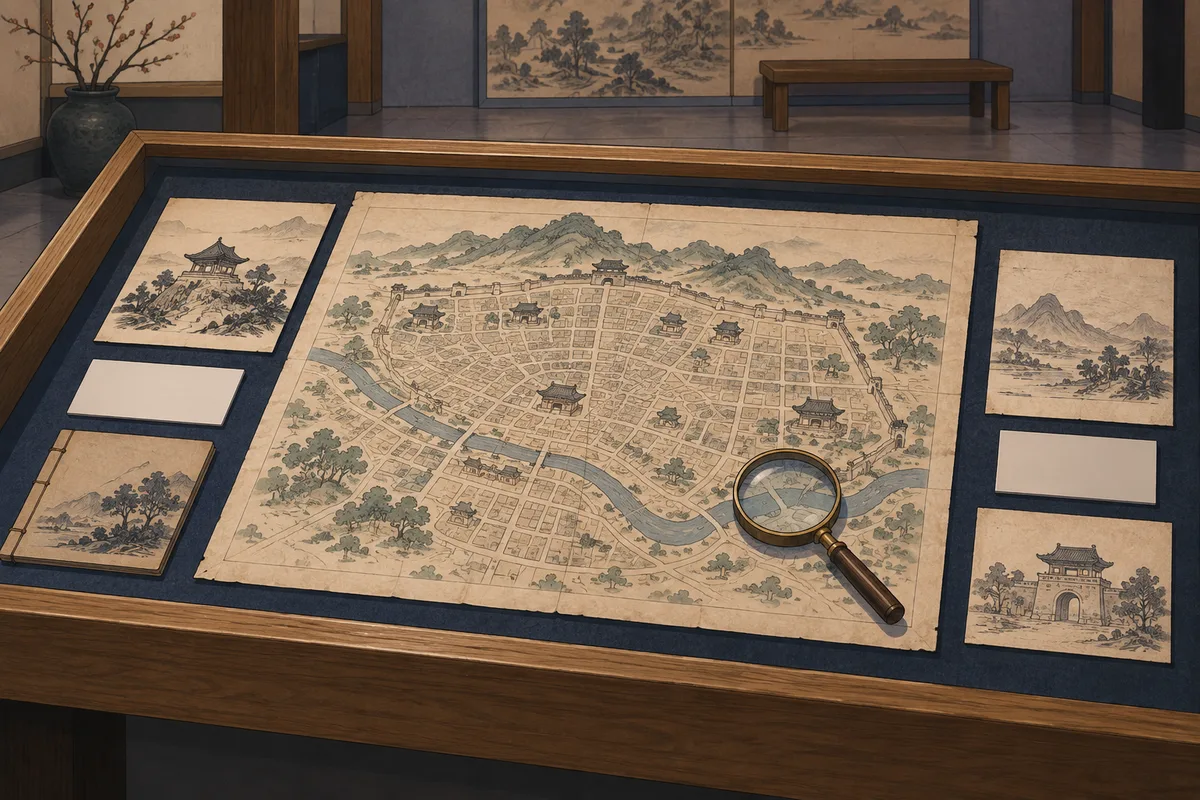
Museum objects and architectural context, illustrated. AI-generated illustration, not a photograph of the venue. Pair it with the outdoor village walk: details in a building model are easier to notice again when you step outside.
The museum and village do not share an opening schedule. A Monday street walk does not mean the galleries will be open.
8 Yeonseo-ro 50-gil. The official listing gives 09:00–18:00, Tuesday to Sunday; when Monday is a public holiday, closure moves to Tuesday. Check holiday notices before travelling.
For a Korean tea experience
4. Darakbang
다락방Darakbang makes tea the activity rather than an incidental drink. Its first-floor Onjeong tearoom hosts tea experiences, with village views from the second floor and education space above. It is a useful choice when you want a planned cultural stop within the hanok neighborhood. Source: Visit Seoul: Darakbang
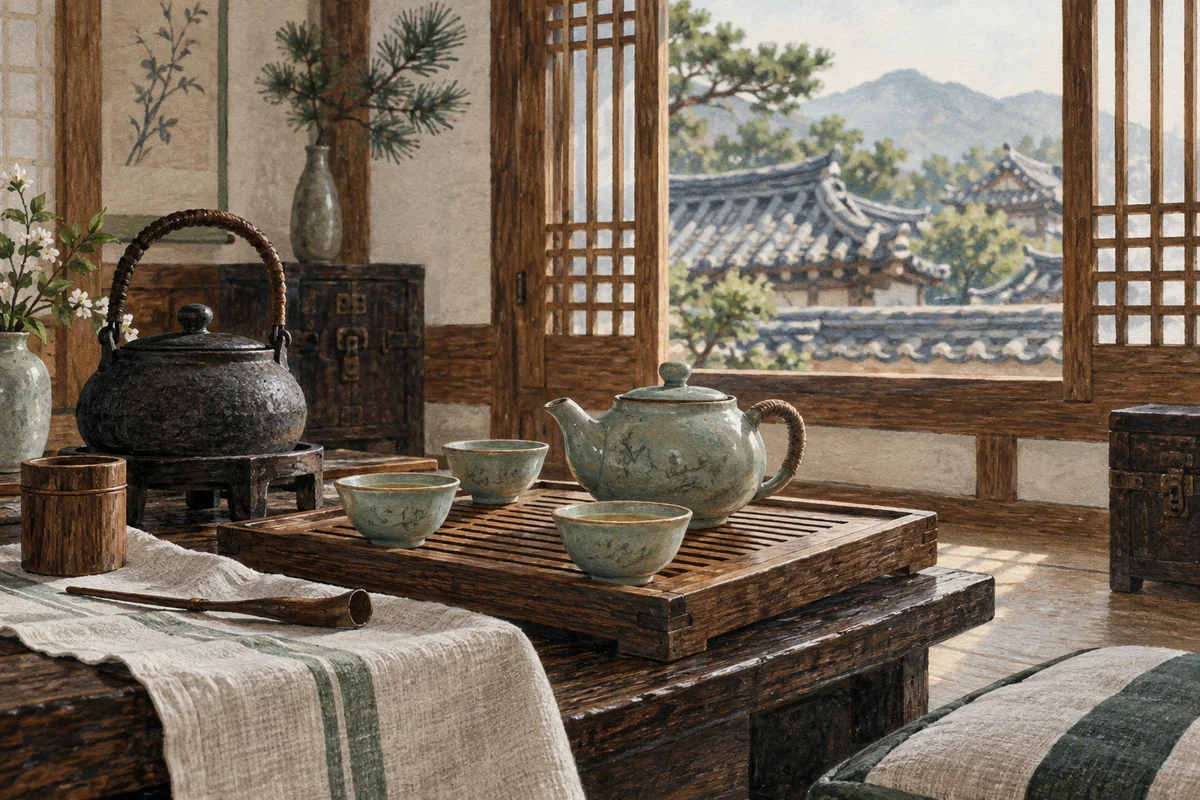
A Korean tea setting, illustrated. AI-generated illustration, not a photograph of the venue. Make the tea session your anchor, then fit the village and museum around its actual booking time.
The official listing says the experience is conducted in Korean. An English travel listing does not establish an English-speaking session.
23 Jingwan-gil. Check the linked booking information for your program, especially the instructor-led Tuesday session. The listing gives a noon-to-13:00 lunch break and Monday closure.
For a café view of the hanok neighborhood
5. 1in1jan
1인1잔At 1in1jan, the reason to stop is the view across hanok roofs toward Bukhansan, with drinks and Korean-style desserts. It is the café choice in this shortlist, distinct from Darakbang’s organized tea experience. A window seat can be the outing’s pause rather than another attraction to hurry through. Source: Visit Seoul: 1in1jan
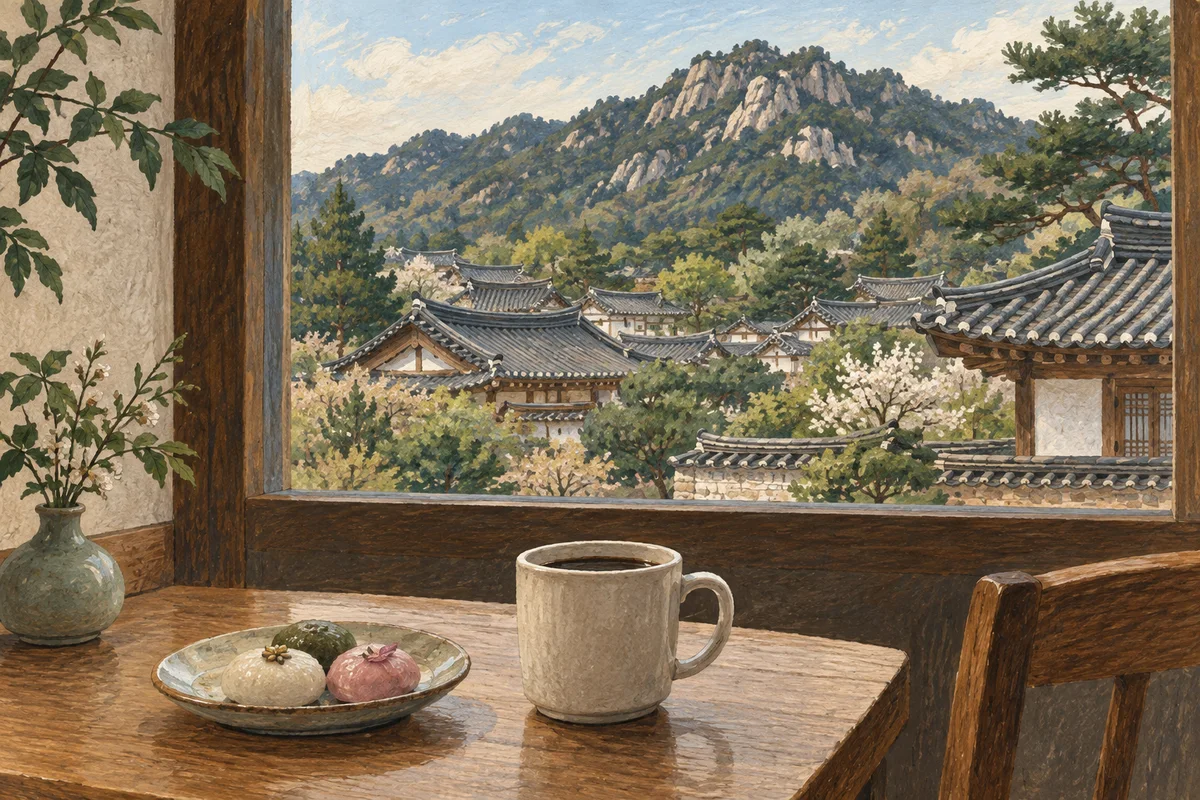
A hanok-view café break, illustrated. AI-generated illustration, not a photograph of the venue. Choose it after the village if you want to sit down and keep the rooflines in view.
Different floors have different service hours. A photograph of a particular seat or terrace does not guarantee that space is available when you arrive.
534 Yeonseo-ro, Eunpyeong-gu. Check the floor-specific hours in the official listing; regular Monday closure has a public-holiday exception.
Before you go
Use Gupabal on Line 3 or Yeonsinnae on Lines 3 and 6, then a local bus toward Hanago and Jingwansa. A rail arrival still leaves a bus or taxi leg. Monday is a poor default for this museum-and-tea plan: the museum, Darakbang and café list regular Monday closures, with holiday exceptions differing by venue.
Sources & checks
Sources checked .
Official visitor information and venue details used for this guide.
- Visit Seoul: Eunpyeong Hanok VillageOfficial tourism guide · Checked 2026-09-15
- Visit Seoul: Jinkwansa TempleOfficial tourism guide · Checked 2026-09-15
- Visit Seoul: Eunpyeong History Hanok MuseumOfficial tourism guide · Checked 2026-09-15
- Visit Seoul: DarakbangOfficial tourism guide · Checked 2026-09-15
- Visit Seoul: 1in1janOfficial tourism guide · Checked 2026-09-15